
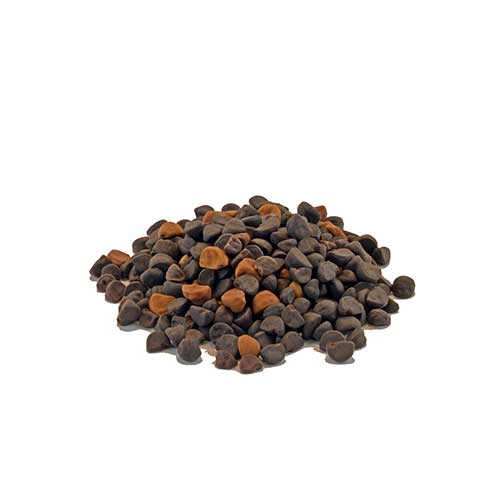
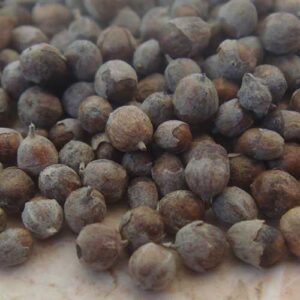
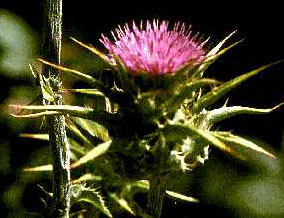
Botanical name: Ocimum tenuiflorum
Also Known As: Tulsi basil, holy basil, or Thai holy basil
The meditational qualities of Holy Basil (Tulsi) and the authentic high-altitude, aged Patchouli we offer, when ground and made into a smoking mixture, are widely popular among sadhus (mendicants) and is used for meditation and calming the spirit. Holy Basil (O. tenuiflorum; synonym, O. sanctum) is a sacred herb in India, where it is used in religious ceremonies and planted around Hindu temples and sacred groves. Sacred groves are believed to be the abode of certain deities or spirits. Both become powerful visionary herbs for dreamers when mixed together, and many report that they like it better than the world-famous Calea zacatechichi.
Holy basil originates in the tropical parts of Asia, but its distribution has been expanded by humans to many tropical regions of the world. It is a highly sacred plant in Hindu religion where it is dedicated to Vishnu. It has a sweet clove-like fragrance. Because of its holiness, it is not used as a food in the Indian sub-continent.
Origins
Holy basil is native to tropical Asia but has been dispersed by humans so that it now grows in many tropical parts of the world. It is a sacred plant in Hindu religion, and has been cultivated in India in courtyards or temples, and in pots in homes, for about 3000 years.
History
The history of the plant in South Asia is closely linked with folklore and mythology. It represents Vishnupriya or Beloved of Vishnu, since it is believed to be the embodiment of the goddess Lakshmi, the spouse of Vishnu. What is apparent is that it has been valued and cultivated since ancient times in India as an intimate link between the household and the spiritual world.
The Aryans, who structured the forms of Hinduism, were nature-worshippers and their poetry and imagery were rich with the evocation of nature. Perhaps they were drawn to holy basil because of its fragrance and delicacy. It may also have been already well-entrenched in the myths of the indigenous people and from there absorbed into Hinduism.
Holy basil is mentioned in the Rig Veda, written in about 1500 BC, and its holiness is celebrated in the Puranas. It is highly regarded in the Ayurvedic system of medicine and is noted in medical treatises such the Charaka Samhita written between the 2nd century BC to the 2nd century AD.
*This product is not intended or sold for ingestion by humans or animals. It is sold only for use as an incense or for smoking. WARNING: Smoking anything, including herbal products of any kind, is harmful to the body.
Reviews
There are no reviews yet.